Spring Vegetable Pasta Primavera with Basil Pesto – A Fresh Bowl of Sunshine from My Cretan Kitchen

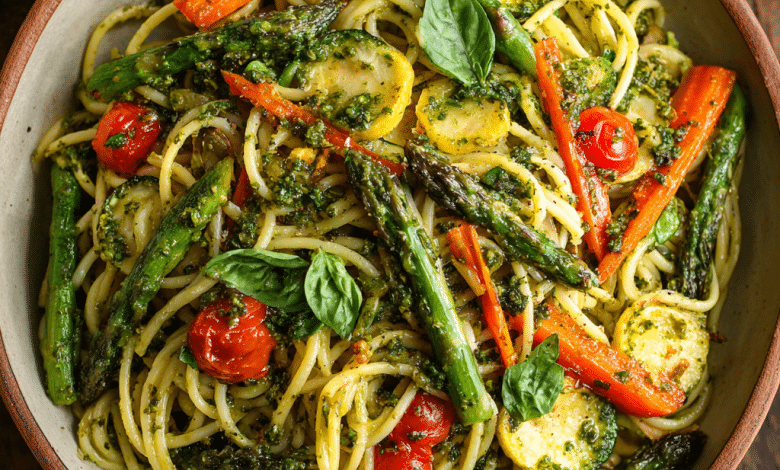
The Story & Intro
Hi, I’m INAYA, 38, from the beautiful island of Crete in Greece. Cooking has been part of my life since I was a child, learning from my grandmother how to make traditional Greek dishes full of love and flavor. I believe food brings people together, especially women who want to share warmth and happiness through cooking. I like to keep things simple but tasty, mixing classic recipes with a little creativity. Sometimes my kitchen gets messy, but that’s where the fun is! Whether you’re new to cooking or have some experience, I’m here to help you enjoy making delicious meals that feel like home. Cooking is about more than just food it’s about sharing stories and making memories.
When spring arrives in Crete, I feel it in my bones. I open the windows early in the morning, and the air smells like wild herbs, orange blossoms, and fresh earth. This is the season that always pulls me back into lighter cooking, colorful vegetables, and meals that feel alive. That’s exactly why I make my Spring Vegetable Pasta Primavera with Basil Pesto every year when the days grow longer.
I remember my grandmother standing at the wooden table, snapping fresh beans and humming softly. She always said spring food should look like a garden on a plate. This Spring Vegetable Pasta Primavera with Basil Pesto carries that memory for me. It feels joyful, green, and generous. I make it when I want to feed my family something nourishing but not heavy, something that makes us linger at the table.
I don’t rush this dish. I chop vegetables slowly, breathe in the smell of fresh basil, and let the olive oil shine. This Spring Vegetable Pasta Primavera with Basil Pesto is not complicated, but it feels special. I make it for lunches with friends, easy dinners, and even quiet evenings when I need comfort without heaviness.
Why I Love Making This Recipe
I love this recipe because it celebrates vegetables instead of hiding them. I don’t drown them in sauce or overcook them. I let them stay crisp, colorful, and proud. This Spring Vegetable Pasta Primavera with Basil Pesto reminds me that food does not need to be heavy to be satisfying.
I also love how flexible it feels. I change the vegetables depending on what the market gives me. Some days I use asparagus and peas, other days zucchini and cherry tomatoes. The basil pesto always ties everything together with its deep green richness.
This dish makes me feel like I’m feeding my family something honest. No tricks. No shortcuts. Just fresh ingredients handled with care.
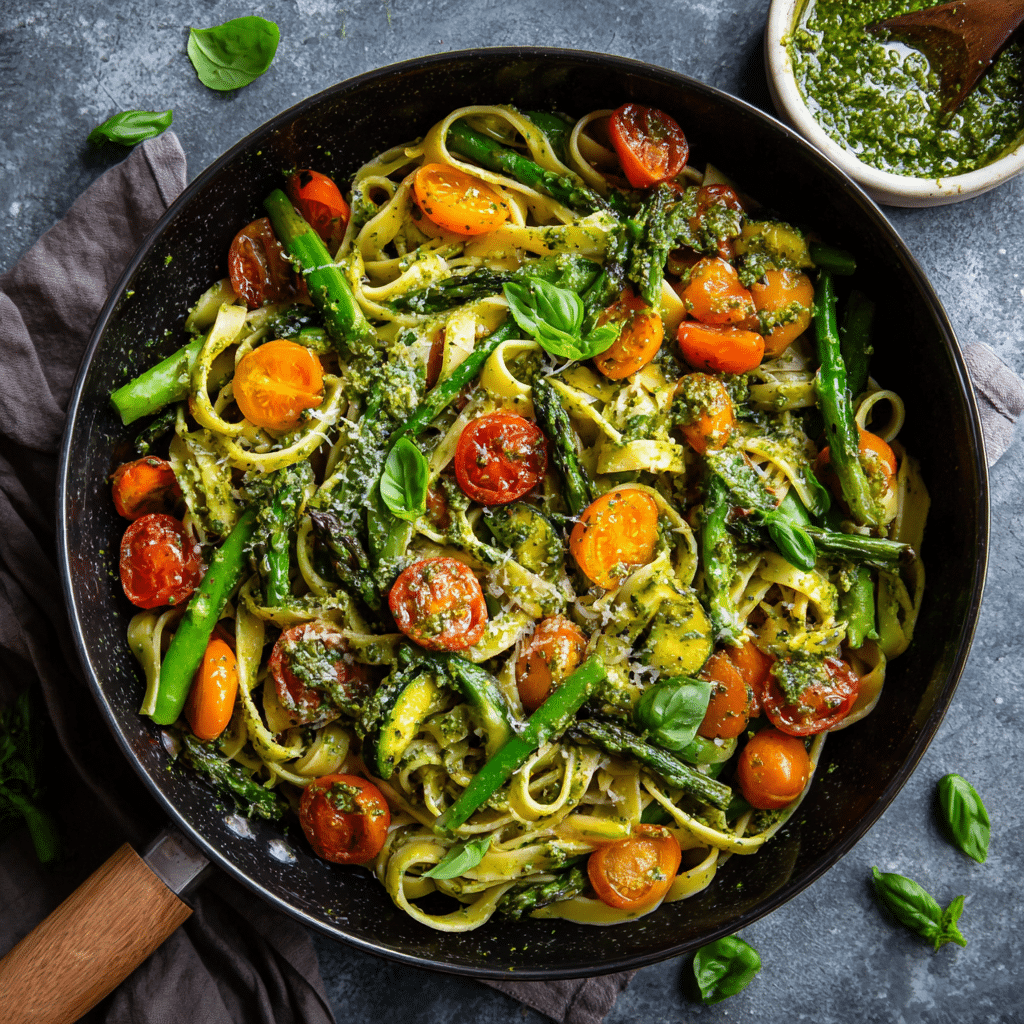
Ingredients & Little Kitchen Secrets
I always say ingredients matter, but how you treat them matters even more.
For this Spring Vegetable Pasta Primavera with Basil Pesto, I choose vegetables that still smell like the field. I never skip good olive oil. I grate my cheese fresh. These little things change everything.
My small secrets:
- I salt the pasta water generously so the pasta tastes alive.
- I blanch vegetables quickly to keep their color.
- I save a cup of pasta water because it creates silkiness without cream.
How I Make It, Step by Step
I start by bringing a big pot of water to a rolling boil. I salt it until it tastes like the sea near my village. While the water heats, I prepare the vegetables.
I slice zucchini into thin half-moons. I trim asparagus and cut it into short pieces. I shell fresh peas when I can, because their sweetness feels like spring itself. I halve cherry tomatoes last so they stay juicy.
I cook the pasta until just al dente. I never overcook pasta. While it cooks, I blanch the vegetables briefly in the same water, one by one, then lift them out and set them aside. This keeps their color bright and their texture tender-crisp.
For the basil pesto, I blend fresh basil leaves with garlic, pine nuts, olive oil, and Parmesan until smooth but still rustic. I don’t like pesto too perfect. It should feel handmade.
I toss the hot pasta with pesto, vegetables, and a splash of pasta water. The sauce clings gently to everything. I finish with lemon zest, extra cheese, and a drizzle of olive oil.
How I Serve It at Home
I serve this Spring Vegetable Pasta Primavera with Basil Pesto in a big bowl in the center of the table. I add extra grated cheese and cracked black pepper. Sometimes I place lemon wedges nearby.
I often serve it with crusty bread and a simple salad. On warm days, I pair it with cold white wine and laughter.
Storage, Reheating & Make-Ahead Tips
I store leftovers in an airtight container for up to three days. I reheat gently with a splash of water or olive oil. I never microwave too long because it dulls the vegetables.
I often make pesto ahead and keep it in the fridge with olive oil on top. That saves time and makes weekday cooking easier.
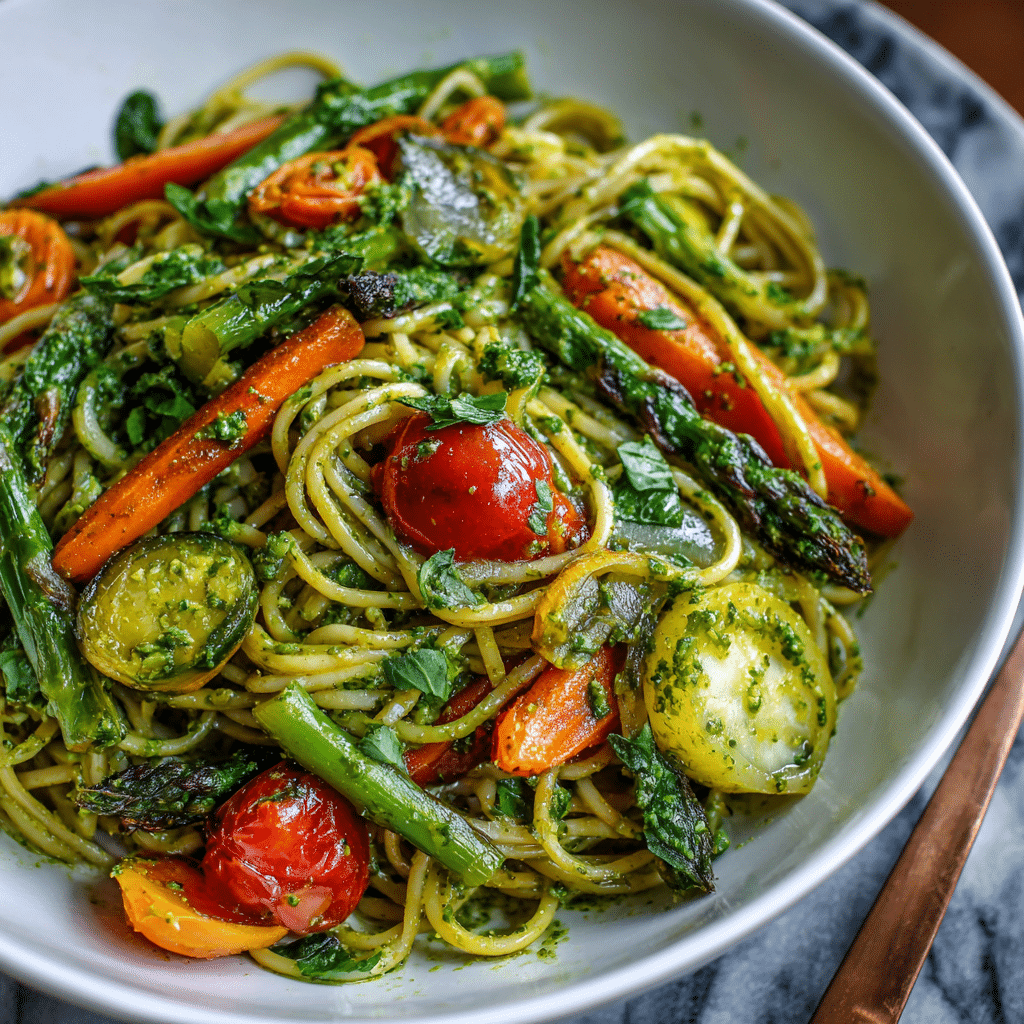
100-Word Short Version
This Spring Vegetable Pasta Primavera with Basil Pesto is my favorite way to welcome spring. I toss al dente pasta with crisp seasonal vegetables and a vibrant homemade basil pesto. The flavors feel fresh, light, and comforting at the same time. I love how flexible this recipe feels, depending on what vegetables I have on hand. It’s perfect for family dinners, lunch leftovers, or sharing with friends. Simple ingredients, honest cooking, and a bowl full of color make this dish feel like sunshine on the table.
Recipe Card Section
⏱️ Time
Prep: 20 minutes
Cook: 20 minutes
Total: 40 minutes
🛒 Ingredients
Pasta, zucchini, asparagus, peas, cherry tomatoes, fresh basil, garlic, pine nuts, Parmesan cheese, olive oil, lemon zest, salt, black pepper
👩🍳 Instructions
- Cook pasta in salted water until al dente
- Blanch vegetables briefly and set aside
- Blend pesto ingredients until rustic
- Toss pasta with pesto, vegetables, and pasta water
- Finish with cheese, lemon zest, and olive oil
📝 Notes
Use seasonal vegetables and good olive oil
🍽️ Nutrition
Fresh, balanced, vegetable-forward, satisfying 🌿
Spring Vegetable Pasta Primavera with Basil Pesto
- Total Time: 40 minutes
- Yield: 4 servings 1x
- Diet: Vegetarian
Description
This Spring Vegetable Pasta Primavera with Basil Pesto is a fresh, colorful, and comforting dish made with seasonal vegetables, al dente pasta, and a vibrant homemade basil pesto. It’s light yet satisfying and perfect for spring and summer meals.
Ingredients
- 400 g pasta
- 1 zucchini, sliced
- 1 bunch asparagus, chopped
- 1 cup fresh peas
- 1 cup cherry tomatoes, halved
- 2 cups fresh basil leaves
- 2 cloves garlic
- 1/4 cup pine nuts
- 1/2 cup grated Parmesan cheese
- 1/2 cup extra virgin olive oil
- Zest of 1 lemon
- Salt and black pepper to taste
Instructions
- Bring a large pot of salted water to a boil and cook the pasta until al dente.
- Blanch the zucchini, asparagus, and peas briefly, then set aside.
- Blend basil, garlic, pine nuts, Parmesan, and olive oil into a rustic pesto.
- Drain pasta, reserving some pasta water.
- Toss pasta with pesto, vegetables, and a splash of pasta water.
- Finish with lemon zest, extra cheese, and olive oil before serving.
Notes
Use any seasonal vegetables you love. Store leftovers in the fridge for up to 3 days and reheat gently with olive oil or water.
- Prep Time: 20 minutes
- Cook Time: 20 minutes
- Category: Dinner
- Method: Boiling
- Cuisine: Italian
Nutrition
- Serving Size: 1 bowl
- Calories: 520
- Sugar: 6 g
- Sodium: 420 mg
- Fat: 22 g
- Saturated Fat: 5 g
- Unsaturated Fat: 15 g
- Trans Fat: 0 g
- Carbohydrates: 62 g
- Fiber: 7 g
- Protein: 16 g
- Cholesterol: 15 mg
Conclusion
Every time I make this Spring Vegetable Pasta Primavera with Basil Pesto, I feel closer to my grandmother and to myself. This dish reminds me that cooking does not need to be loud to be meaningful. It only needs care. I hope you make it in your kitchen and feel the same quiet joy I do when the bowl lands on the table.